OEM/ODM BUYER CHECKLIST
How to Choose an OEM/ODM Security Camera Manufacturer: A Practical Buyer’s Checklist
Choosing an OEM/ODM security camera manufacturer is not only about comparing price lists. For distributors, importers, system integrators and private-label brands, the supplier you choose affects product quality, delivery stability, brand reputation, customer complaints and long-term market growth.
What Does OEM/ODM Mean in Security Cameras?
OEM usually means the factory produces security cameras under your brand or packaging requirements. You may use an existing product platform but customize the logo, packaging, label, manual, app information or accessories.
ODM usually involves deeper product development or configuration support. The supplier may help adjust product design, firmware options, housing, lens, camera module, lighting, solar power configuration or system combination according to your target market.
In real sourcing, many projects sit between OEM and ODM. A buyer may start with an existing WiFi and 4G camera option or PoE camera platform, then request private-label packaging, language manuals, custom kits or market-specific accessories.
Why Supplier Selection Matters
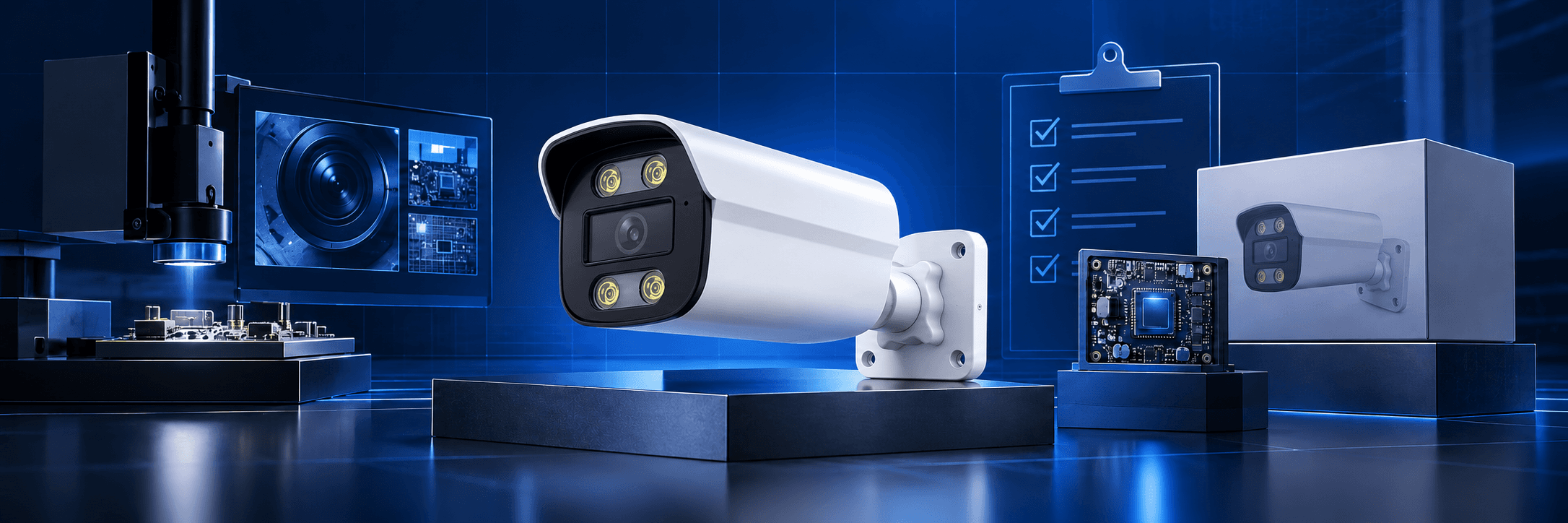
A security camera product may look simple on the outside, but its performance depends on sensor and lens, chipset and firmware, IR or white-light modules, waterproof sealing, network modules, app experience, NVR compatibility, power adapter quality, packaging protection and shipment inspection.
If one part fails, the buyer may face returns, complaints, negative reviews or project delays. A reliable supplier helps reduce these risks before the goods leave the factory. You can also review the JBC company and quality workflow when evaluating long-term cooperation.
OEM/ODM Manufacturer Checklist
Product Range and Market Fit
A good OEM/ODM security camera supplier should offer product categories that match your market, from IP cameras and PoE cameras to WiFi, 4G, solar, battery, PTZ, bullet, dome, turret and complete camera kits.
- Ask for best-selling models and typical applications.
- Check whether recommendations match your sales channel.
- Avoid suppliers who describe every product as simply hot selling.
Technical Specification Clarity
Clear specifications reduce misunderstandings and help your sales team create accurate product pages, brochures and project proposals.
- Resolution, lens, night vision and waterproof rating
- App, NVR, storage and audio compatibility
- Wireless frequency, 4G bands and operating temperature
Sample Testing Process
Before bulk ordering, sample testing should include both product performance and user experience.
- Daylight, low-light and night-vision image quality
- WiFi, 4G or PoE network stability
- App setup, waterproof structure and bracket strength
Factory Testing and Quality Control
A serious supplier should have a testing process before shipment and be able to explain which checks are performed for every unit or by sampling.
- Power-on, image, night vision and audio tests
- Network, app pairing and NVR compatibility tests
- Aging test, waterproof inspection and packaging check
OEM Customization Capability
OEM customization may include logo printing, private-label packaging, custom labels, manuals, app QR codes, carton marks, accessories and bundle configuration.
- Confirm MOQ and lead time early.
- Approve artwork, labels and packaging proofs before production.
- For ODM, confirm housing, firmware, lens, solar and kit configuration scope.
Packaging and Shipment Inspection
Packaging protects the product and affects customer experience after international shipping.
- Model, quantity, logo, label and accessories
- User manual, power adapter standard and carton strength
- Random functional testing before shipment
Communication and After-Sales Support
In B2B sourcing, communication quality matters. You need a supplier who can answer product questions clearly, confirm details in writing and respond quickly when issues happen. Good communication includes clear quotation, accurate product recommendation, written confirmation of specifications, sample tracking, production updates, inspection photos, shipment documents and after-sales support.
Security camera buyers need support after shipment. Common topics include app setup, firmware, connection issues, power adapters, NVR pairing, night vision performance and installation guidance. For product portfolio planning, it is useful to compare PoE, WiFi and 4G camera options before confirming your core product line.
Common Red Flags When Choosing a Supplier
Avoid choosing a supplier based only on the lowest price. A very low price may hide weak components, poor testing, unstable firmware or insufficient packaging.
Be careful if the supplier cannot provide clear specifications, sample support, packaging details or realistic lead times. Also be cautious if every product is described with exaggerated claims. Professional suppliers should explain both strengths and limits.
A stronger sourcing plan usually covers multiple practical categories, including security camera systems for projects and solar security cameras for remote sites when fixed power or broadband is difficult.
FAQ
What is the difference between OEM and ODM security cameras?
OEM usually uses an existing product platform with your logo or packaging. ODM may involve deeper product design, configuration, firmware, housing or system customization.
What MOQ is common for private-label security cameras?
MOQ depends on product type and customization level. Logo or packaging customization usually requires a minimum quantity. Deeper ODM changes require higher MOQ and longer development time.
Should I order samples before bulk purchase?
Yes. Sample testing is strongly recommended. It helps verify product performance, app experience, packaging, accessories and market fit.
What should be checked before shipment?
Check model, quantity, accessories, labels, packaging, basic function, image quality, power-on test and carton condition. For OEM orders, check logo and packaging carefully.
Can one supplier cover PoE, WiFi, 4G and solar cameras?
Some suppliers can cover multiple categories. The key is whether they can provide stable product platforms, clear specifications and practical product guidance.
Conclusion
Choosing an OEM/ODM security camera manufacturer requires more than comparing price. You need to evaluate product range, technical clarity, sample testing, factory quality control, customization ability, packaging, shipment inspection, communication and after-sales support.
A good supplier helps you reduce risk before shipment and build a product line your customers can trust.