
SOLAR 4G CAMERA GUIDE
Solar 4G Security Cameras for Remote Sites: Applications, Selection Tips, and Common Mistakes
Solar 4G security cameras are designed for locations where fixed power and wired internet are difficult or unavailable, including farms, construction sites, fish ponds, ranches, remote warehouses, equipment yards, parking areas and temporary outdoor projects.
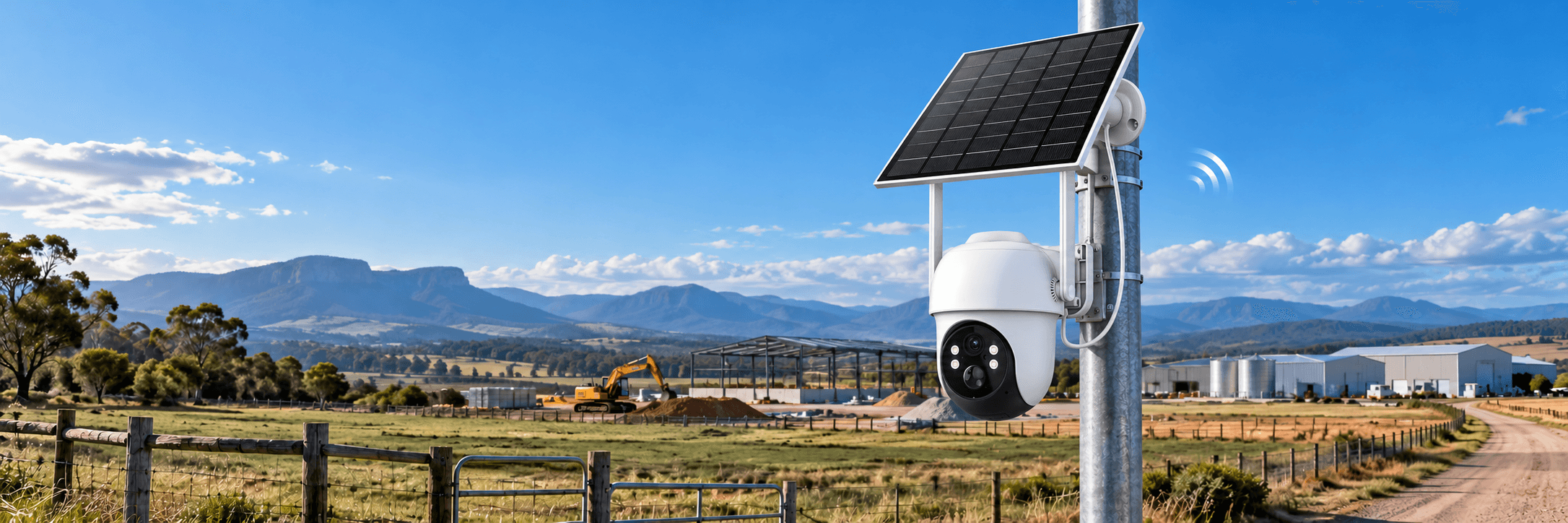
What Is a Solar 4G Security Camera?
A solar 4G security camera combines a camera, 4G mobile network module, battery and solar panel. The camera connects to the internet through a SIM card. The solar panel charges the battery during daylight, and the battery powers the camera when sunlight is not available.
Some models are fixed bullet cameras. Others are PTZ cameras with pan, tilt and zoom functions. Many Solar security cameras support motion detection, app alerts, two-way audio, color night vision, local storage and remote live view.
Best Applications for Solar 4G Cameras
Farms and rural properties
Farms often have wide areas, limited wiring and weak fixed internet. Solar 4G cameras can monitor entrances, equipment storage, livestock areas, fish ponds or crop fields.
Construction sites
Construction sites are temporary and often change layout. A solar 4G camera can monitor materials, machinery, site entrances or working areas before permanent infrastructure is available.
Remote warehouses and storage yards
Some warehouses or outdoor yards may not have stable internet in every area. Solar 4G cameras can cover gates, loading zones, containers or perimeter areas. If the project needs a broader package, review security camera systems for recorder and kit options.
Key Selection Factors
| Factor | What B2B Buyers Should Check |
|---|---|
| Mobile signal strength | Check the exact installation location and target carrier before bulk installation. |
| Solar panel size | Confirm wattage, battery capacity and recommended sunlight conditions, not only product photos. |
| Battery capacity | Set realistic expectations for cloudy days, rainy seasons and frequent live viewing. |
| Recording mode | Event-based recording saves more power and data than continuous recording. |
| Night vision type | Infrared saves power; white light can provide color images but consumes more energy. |
| Outdoor structure | Check waterproof sealing, cable protection, bracket strength and antenna placement. |
If you are still deciding between wired, wireless and cellular options, first compare PoE, WiFi and 4G security cameras for your project environment.
Installation Preparation
Good installation preparation can prevent many after-sales problems. Before installation, confirm:
- SIM card compatibility
- Mobile signal strength
- Solar panel direction
- Mounting height and camera angle
- Shading from trees or buildings
- Waterproof cable protection
- Battery charging status
- App setup process
- Local storage card compatibility
Factory Testing Before Shipment
For B2B buyers, solar 4G cameras should be tested before shipment. A useful testing process includes power-on test, SIM card connection test, app pairing test, live view test, motion detection test, night vision test, solar charging test, battery charging and discharge check, waterproof structure inspection and accessory packaging check.
If the product includes a solar panel, inspect the panel surface, cable, connector and bracket. For shipment inspection, confirm that every package includes the correct accessories.
Common Mistakes Buyers Should Avoid
Ignoring SIM card compatibility
Not every 4G camera supports every frequency band or carrier. Before bulk purchase, confirm the target country and supported bands.
Expecting unlimited battery life
Solar cameras still depend on sunlight and battery capacity. Long rainy periods, frequent live viewing and continuous recording can reduce battery life.
Installing the solar panel in shade
Even a good solar camera will perform poorly if the panel is blocked. Installation guidance should be included in product manuals and sales materials.
Choosing PTZ when a fixed camera is enough
PTZ cameras offer flexible viewing, but they may consume more power and cost more. For a fixed entrance or gate, a bullet camera may be more efficient.
Selling without explaining data usage
4G cameras require SIM data. Customers should understand how live view, recording, resolution and alerts affect data usage.
How Distributors Can Position Solar 4G Cameras
For distributors, solar 4G cameras should be positioned as problem-solving products, not only as wireless cameras. The real value is remote monitoring without fixed power or broadband.
Sales materials should explain where the product is suitable, what conditions are required, how to check signal strength, how to install the solar panel, how recording mode affects battery, what accessories are included and what customers should prepare before installation.
FAQ
Do solar 4G cameras need WiFi?
No. They use a SIM card and mobile network. WiFi is not required for normal remote viewing.
Can solar 4G cameras work at night?
Yes. The battery powers the camera at night. Night vision may be infrared, white light or dual-light depending on the model.
How long can a solar camera work without sunlight?
It depends on battery capacity, camera power consumption, recording mode, live view frequency and weather. Buyers should test samples in realistic conditions before bulk purchase.
Are solar 4G cameras suitable for construction sites?
Yes, especially temporary sites without fixed internet or power. Installation should consider mounting stability, theft risk, dust and weather.
What should I check before buying solar 4G cameras in bulk?
Check 4G band compatibility, battery capacity, solar panel size, waterproof design, app stability, night vision, packaging, accessories and factory testing process.
Conclusion
Solar 4G security cameras are valuable for remote sites where wiring and broadband are difficult. Successful use depends on correct product selection and installation planning. Buyers should evaluate signal strength, solar charging, battery capacity, recording mode, night vision, waterproof structure and real customer expectations.